Many phenomena in nature can be represented as time series, and it is frequently necessary to know how their
frequency content varies with time. If the time series is non-stationary and transient, this type of analysis can be performed using the
wavelet transform. This approach allows a local analysis within windows having different frequency ranges. In this article,
continuous and discrete wavelet transforms are used following different approaches to analyze output signals generated with bender
elements placed on Texcoco clay samples tested in an instrumented triaxial cell, to assess the S-wave arrival time. Travel times were
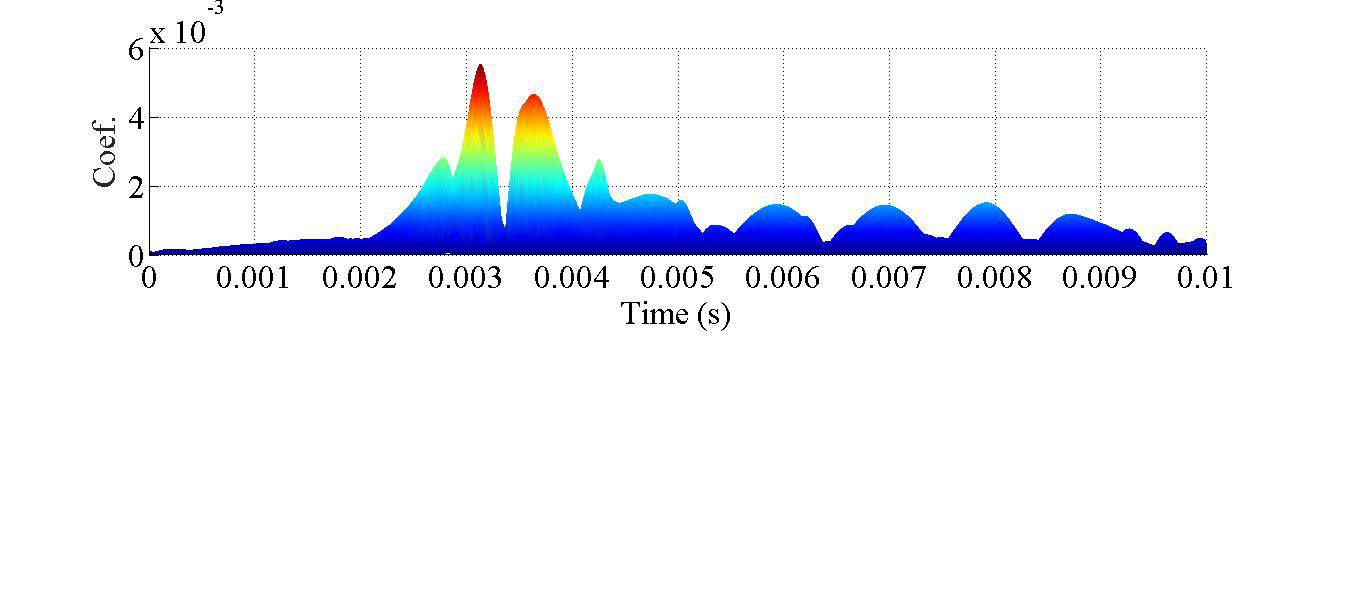
regarded as: a) a specific event with a high relative value of energy at a specific time in different levels; b) a maximum peak in a
time-scale-coefficients diagram, and c) a relative peak in a reconstructed output signal using wavelet coefficients that were previously
filtered with a threshold filter. It is shown that S-wave arrival times obtained with those approaches can be slightly dissimilar because
they use different selection criteria, and besides, different types of mother wavelets were applied to obtain the wavelet coefficients.
S-wave velocities (Vs) assessed with the different wavelet transform approaches are also compared with those evaluated from a
resonant column apparatus, showing that, in general, Vs values agree well.
Fernández-Lavín A. y Ovando-Shelley, E. (2022) “S-wave assessment using time-scale approaches with wavelets”, Proceedings of 20th International Conference on Soil Mechanics and Geotechnical Engineering (ICSMGE 2022), Ed. Md Mizanur Rahman and Mark Jaksa, pp: 69-74.